
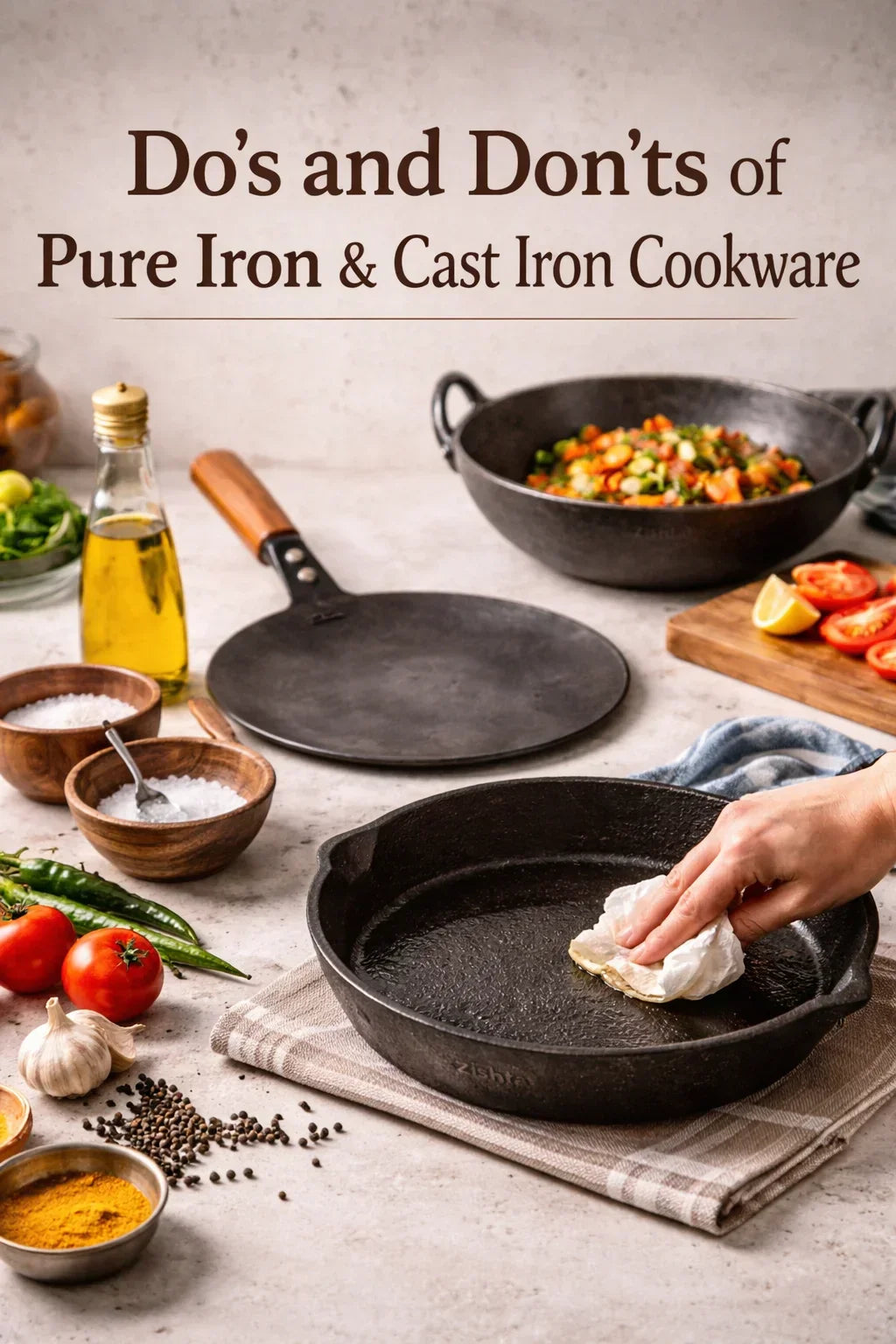
Do’s and Don’ts of Pure Iron and Cast Iron Cookware for Everyday Cooking
This blog answers the most common questions people have before and after buying pure iron and cast iron cookware. It focuses on seasoning, cooking suitability, rust care, and everyday use, based on traditional practices and real kitchen experience.
Do Pure Iron and Cast Iron Cookware Need Seasoning?
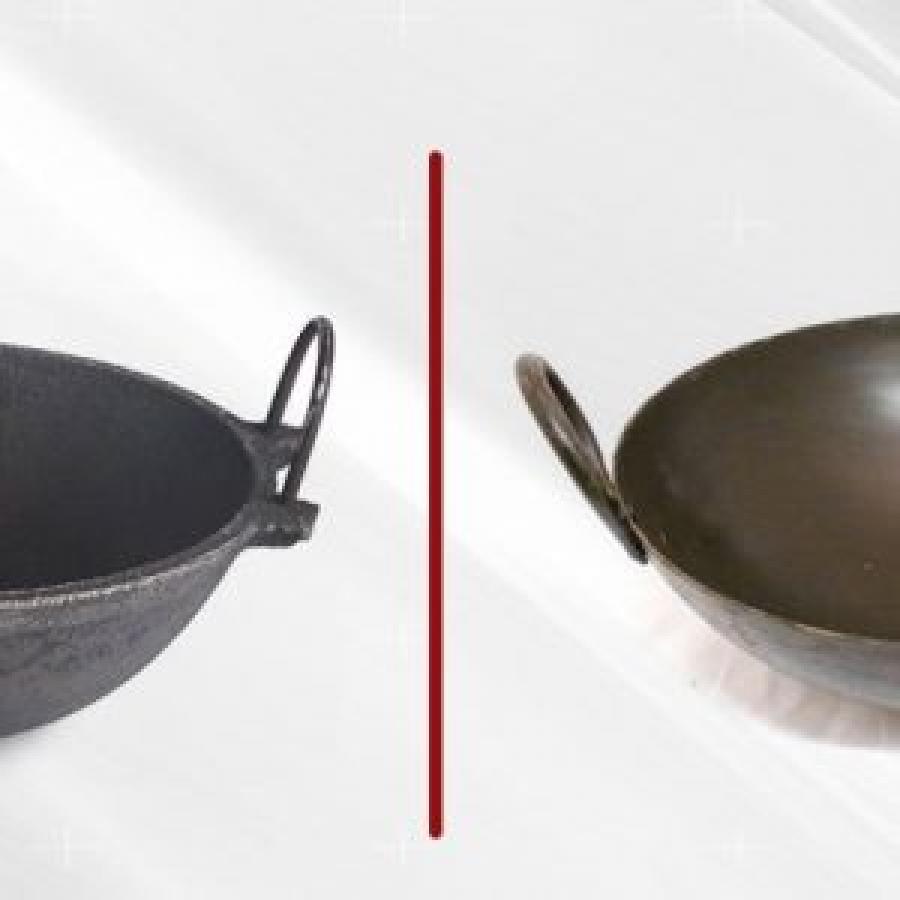
Seasoning is essential for how iron cookware performs over time. Pure iron cookware from Zishta does not need additional seasoning before first use because it is already treated using traditional methods with sesame oil, heat, and husk. This process prepares the surface for cooking and protects it during storage.
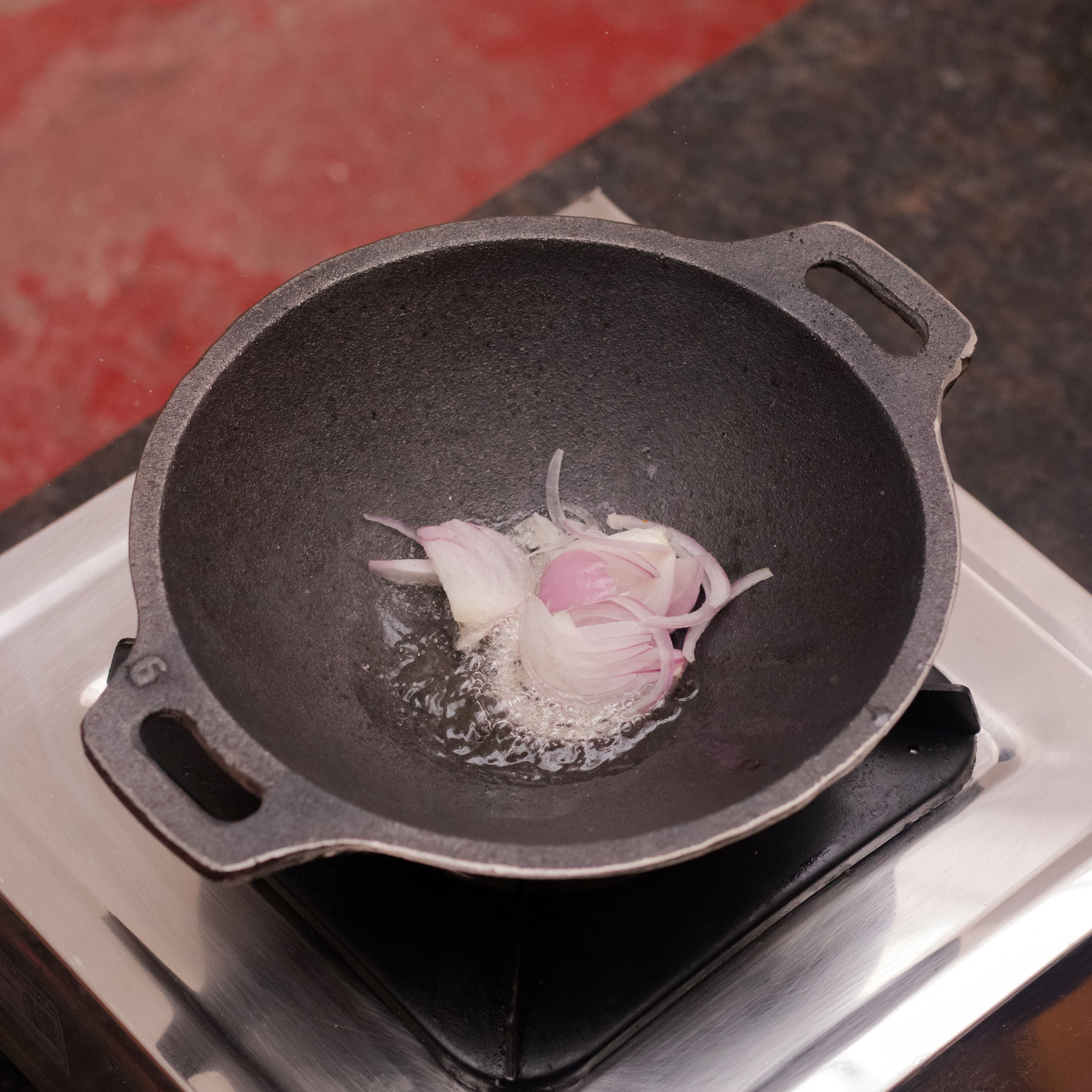
Cast iron cookware, on the other hand, does require seasoning before the first use. Cast iron has tiny pores that open when heated. Oil fills these pores and forms a smooth layer that reduces sticking and protects the surface. Most of this process is already done, but the final step is left to the user so the cookware does not look pre-used. This is a one-time process and becomes stronger with regular cooking.
What Can and Cannot Be Cooked in Iron and Cast Iron Cookware?
Iron and cast iron cookware are versatile, but some foods need caution. Highly acidic ingredients such as tamarind, lemon, and other citrus-based foods are not recommended. Their acidity can cause excess iron to leach into the food, which may affect taste and make it slightly bitter.
Food cooked in iron cookware should be transferred to another vessel soon after cooking. With regular use and good seasoning, mild acidic ingredients like tomatoes can be used occasionally in cast iron after four to five months of use, once the surface has stabilized. However, tamarind and lemon-based cooking should still be avoided.
Food cooked in cast iron can be left in the vessel for a short period, usually up to two or three hours. Beyond that, it should be transferred to another container.
Does Pure Iron or Cast Iron Cookware Rust?
Yes, iron and cast iron cookware can rust if not used or stored properly. Rust usually appears when the cookware is left unused for long periods or exposed to moisture. In traditional kitchens, iron cookware was often wiped clean instead of washed every time. The thin layer of oil left behind helped maintain seasoning and prevents rust.
When washing is required, the cookware should be wiped dry immediately and lightly oiled. If it will not be used for a few weeks, applying a thin coat of cooking oil before storage helps prevent rust.
How to Remove Rust from Iron or Cast Iron Cookware?
Rust does not mean the cookware is damaged. Surface rust can be removed by scrubbing the affected area with a mixture of cooking oil and salt. This removes rust without harming the metal.
After scrubbing, wash the cookware, dry it completely, heat it on the stove, and apply a thin layer of oil. This restores the surface and makes the cookware ready for use again.
Everyday Do’s and Don’ts for Long-Lasting Iron Cookware
Iron cookware improves with regular use. Avoid leaving it wet, avoid long storage of cooked food, and avoid harsh cleaning methods. Drying, light oiling, and consistent cooking are enough to keep it in good condition. With these simple practices, pure iron and cast iron cookware remain reliable, chemical-free, and long lasting.
For a deeper understanding of how to choose, use, and maintain iron cookware, read our complete guide on pure iron and cast iron cookware.

Leave a comment
All comments are moderated before being published.
This site is protected by hCaptcha and the hCaptcha Privacy Policy and Terms of Service apply.