
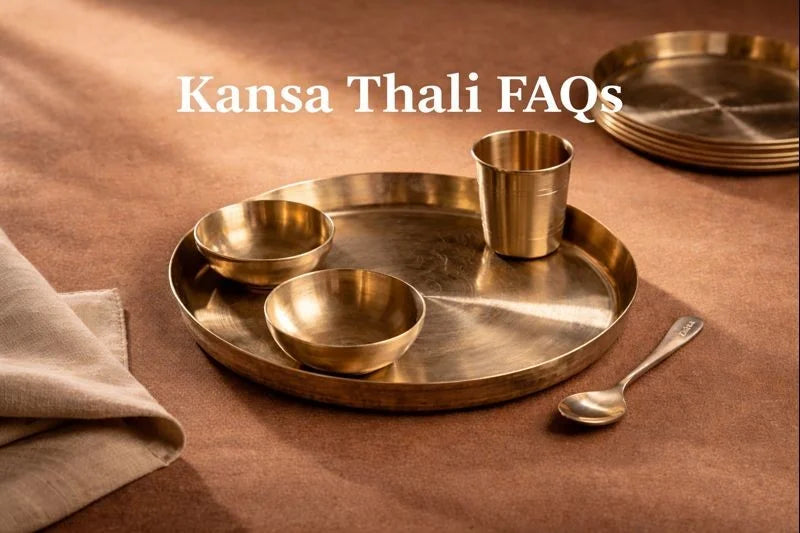
1. What is a Kansa Thali?
A Kansa Thali is traditional Indian dinnerware made from Kansa, an alloy of copper and tin, typically in a 78% copper and 22% tin ratio.
2. Can we eat in a Kansa Thali or bronze plate?
Yes. Eating from a Kansa thali is considered beneficial, as Kansa is traditionally known for its free radical–removing properties and overall health benefits.
3. Can we eat curd in a Kansa thali?
Yes. When Kansa is made in the correct 78:22 copper-to-tin ratio, no adverse reaction or taste change has been observed while storing or eating curd.
4. How do I use a Kansa Thali?
Kansa thalis can be used for regular meals. No special handling is required. Occasionally, washing with tamarind or lime skin helps restore natural shine.
5. What are the benefits of using a Kansa Thali?
Kansa is traditionally believed to purify food and water, support digestion, and help enhance overall immunity and well-being.
6. Kansa vs Pital for a thali set – which is better?
Kansa is considered better for thalis. Pital (brass) often requires kalai (tin coating) for sour foods, whereas Kansa can be used directly without coating.
7. How do I clean a Kansa Thali?
For daily cleaning, use regular dishwashing liquid. To restore shine, occasionally use lime or tamarind skin. Zishta Kansa cookware and serveware are also dishwasher-friendly.
8. Can I eat all types of food in a Kansa Thali?
Yes. All types of food, including sour and spicy dishes, can be safely eaten in a Kansa thali.
9. Why is Kansa considered an Ayurvedic metal for dining?
Kansa is considered Ayurvedic because it is believed to balance the body’s doshas, support digestion, and promote overall wellness when used regularly. To know more, read our blog Discover the Historical Significance of Kansa.
10. Can Kansa Thali be used for serving hot food?
Yes. Kansa thalis are safe for serving hot food and are traditionally used to serve freshly cooked meals while retaining warmth well.
11. Does food taste different when served in a Kansa Thali?
Yes. Many people feel food tastes better in a Kansa thali, as the metal helps maintain temperature and is believed to naturally enhance flavour.
12. Is Kansa Thali suitable for kids and elderly people?
Yes. Kansa thalis are safe for both kids and elderly people and are traditionally believed to support gentle digestion.
13. How can I check if a Kansa Thali is pure and authentic?
Authentic Kansa is heavier, has a dull golden tone, and produces a mild ringing sound when tapped. It is not bright or shiny like brass.
14. What makes Kansa better than other metal thalis?
Kansa retains food temperature well, does not react with food, and is traditionally believed to support digestion, making it ideal for everyday dining.
15. Can Kansa Thali be used for both vegetarian and non-vegetarian food?
Yes. Kansa is non-reactive and can be used for serving both vegetarian and non-vegetarian meals.
16. Can we eat from a Kansa Thali daily?
Yes. Kansa thalis are suitable for daily use and have been traditionally used for everyday meals due to their durability and wellness benefits.
To know how a Kansa Thali is made, read our blog The Journey of a Kansa Thali.

Leave a comment
All comments are moderated before being published.
This site is protected by hCaptcha and the hCaptcha Privacy Policy and Terms of Service apply.