
Congrats on your journey to imbibe traditional wisdom to your home. Zishta is glad to be a part of this journey and support you with authentic traditional knowledge gathered through our journeys, discussions with artisans, local communities and scientific information.
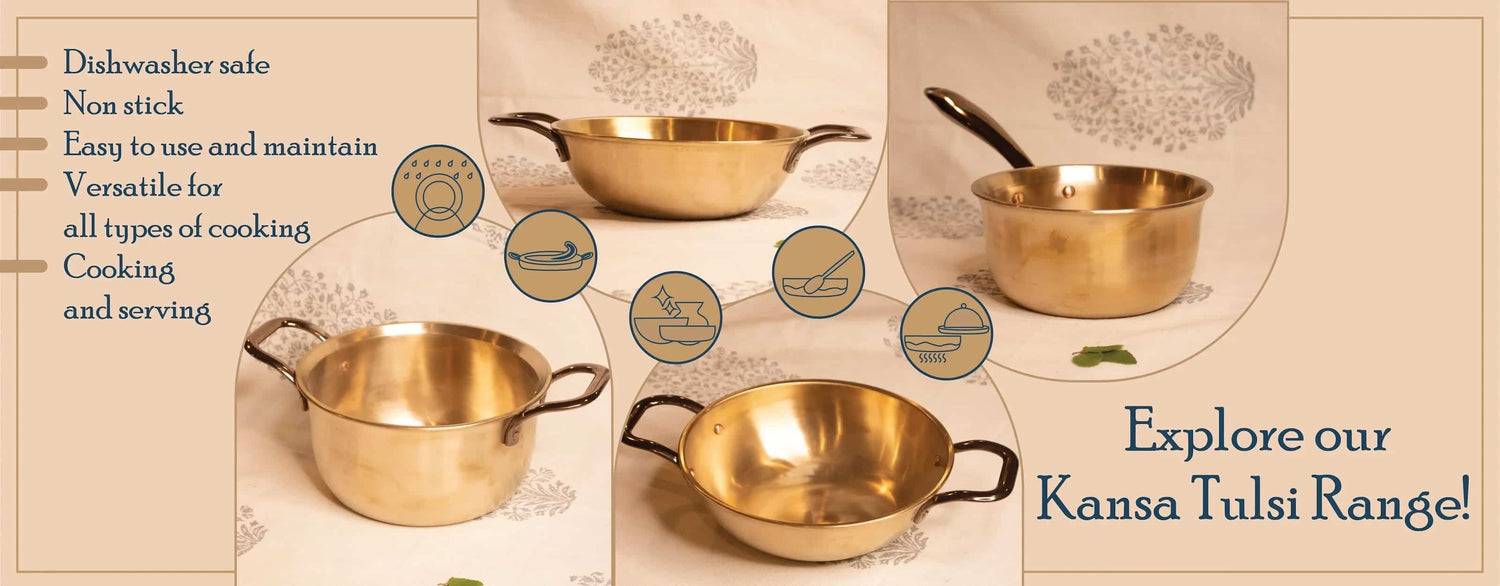
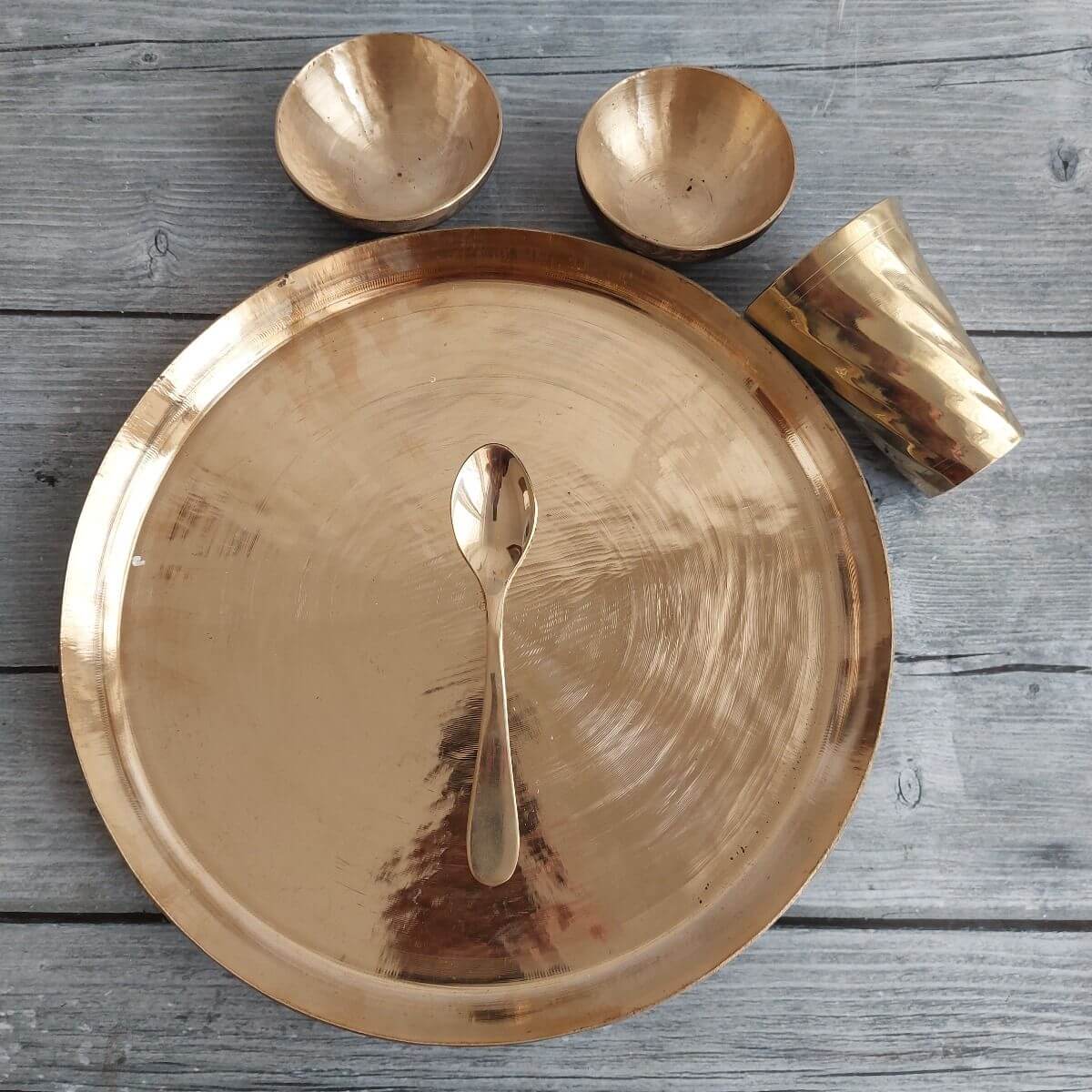
Zishta in collaboration with artisans of Tamil Nadu, Gujarat and Maharashtra, bring to you most authentic and traditional Kansa (Bronze) vessels that are everlasting. These are made using the most traditional technique honed over centuries by our artisans.
What is Kansa?
Kansa or Kansya is a traditional Bronze that is widely used in India for making various utensils, particularly in cooking. It is an alloy of Copper and Tin in the ratio of 78% tp 22% respectively.
The use of Kansa in India has a rich and ancient history, dating back thousands of years. Kansa has been an integral part of Indian culture and cooking.
What are the Benefits of Cooking in Kansa?
Kansa or Bronze is called as "Shuddha datu" in Vedas. Cooking in Kansa has the following benefits:
- Enhances intellect
- Boosts immunity
- Balancing doshas
- Improves gut health
- Improves appetite
- Antimicrobial properties purifies food.
- Good conductor of heat & hence retains heat well. Food cooks evenly and much faster.
How to clean and maintain Kansa/Bronze vessels?
Maintaining Kansa/Bronze vessel is as simple as any other vessel.
- One can use any dish washing liquid or mild soap to clean it.
- Do not use steel scrubbers as it will leave scratch marks.
- Wash well with either tamarind or lemon to bring shine back.
- Do not refrigerate the vessel.
- It is not recommended to use dishwasher for cleaning.
Frequently asked questions
1. Is Kansa safe for cooking and eating food?
Yes. Kansa (bell metal) is considered safe for both cooking and serving. It has been traditionally used in Indian kitchens for centuries and is valued for its stability, high copper–tin composition, and natural antimicrobial properties. When used for quick cooking, serving, and eating, Kansa is completely food-safe.
2. How is Kansa different from brass?
Kansa is a specific type of bronze made from copper and tin in a traditional ratio. It is harder, more durable, and more stable than brass (which is copper + zinc). Unlike brass, Kansa does not require tin coating and is ideal for both cooking and serving. Its colour is also more muted and matte compared to the bright yellow of brass.
3. Does Kansa cookware require tin coating?
No. Pure Kansa does not require tinning (kalai) because its copper–tin alloy is stable and safe for direct cooking. This is one of the key advantages that sets Kansa apart from brass cookware.
4. Will Kansa change colour over time, and is that normal?
Yes. Like all traditional metals, Kansa naturally develops a darker patina with use. This colour change is completely normal and does not affect performance or safety. Many people consider the patina as a sign of authenticity and long-term usability.
5. Should we season Kansa/Bronze vessels before cooking?
Kansa/Bronze vessels does not require any seasoning. But, always ensure that in any traditional vessel, only gravy based food is cooked for the initial 2-3 times. First few times, do not do tadka or fry in it.
6. Can we boil milk in Kansa vessels? Is it safe?
Yes. It is safe to boil milk in Kansa/Bronze vessels.
Related Videos:
Difference Between Brass and Bronze Vessels
For more details visit:
Subscribe/Follow us on



 +91 6360966871
No.1676, 17th Main, KSRTC Layout, JP Nagar 2nd phase, Bangalore-560078.

9 comments
Dr.Ramashanker Singh
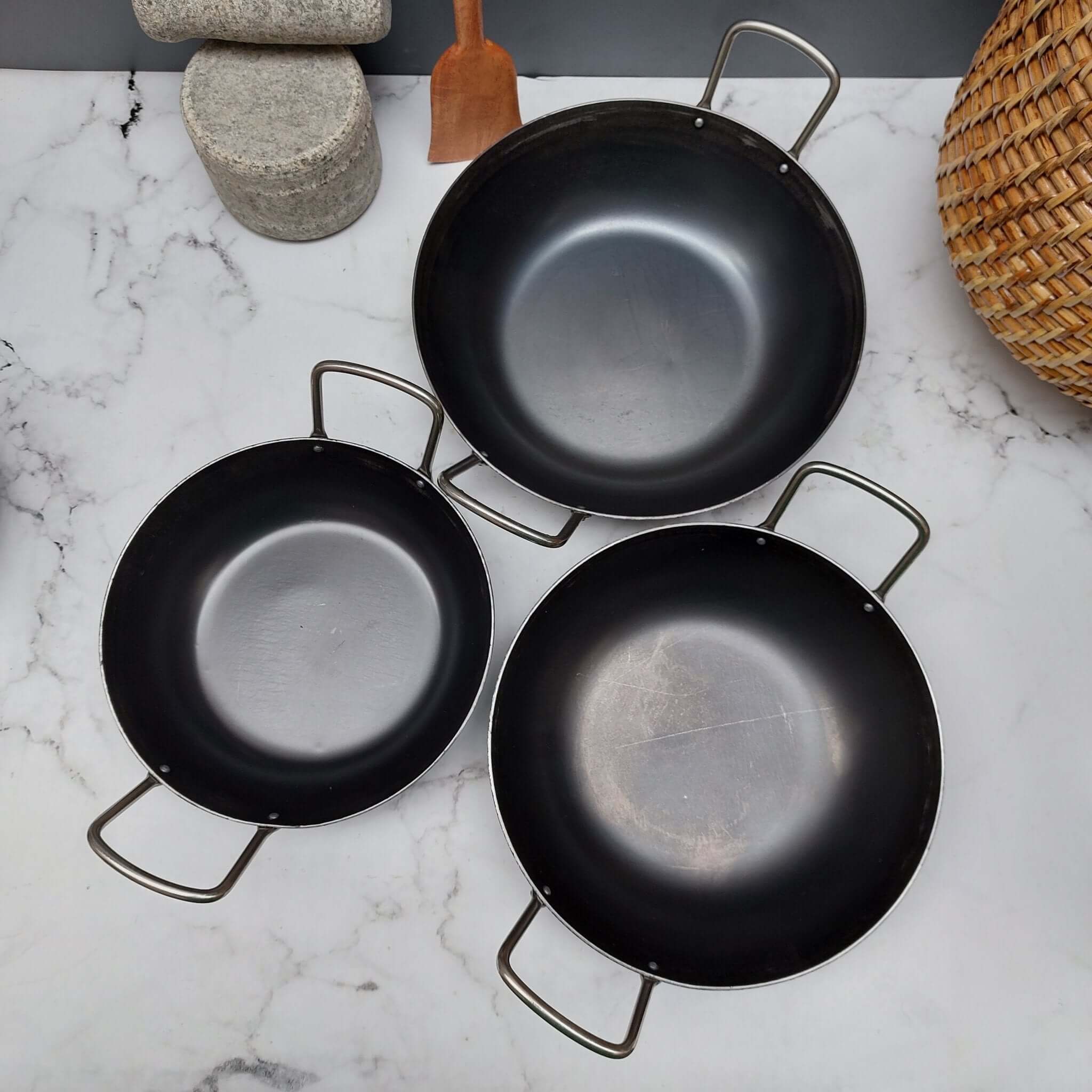
Mediua size bronze Kadahi
MUTTHU Naveen
Hello
Greetings
Is is tin coating pure or mixed with alloy of any other metal? (Ex : zinc, lead etc)
No where it has been mentioned
Can you please clarify me?
Thank you
Naveen
Padma
Hi. By tinning, are we not blocking the anti microbial property of Bronze or Brass? Does tinning completely block leaching of copper into food or only reduce leaching? If it just reduces and not blocks completely, then it makes sense. But if it does block completely, then it doesn’t serve purpose, right? Please clarify. Thank you.
Rajitha
Iam looking in to bronze milk or sause 2 litre cost ? without lid
Leave a comment
All comments are moderated before being published.
This site is protected by hCaptcha and the hCaptcha Privacy Policy and Terms of Service apply.