


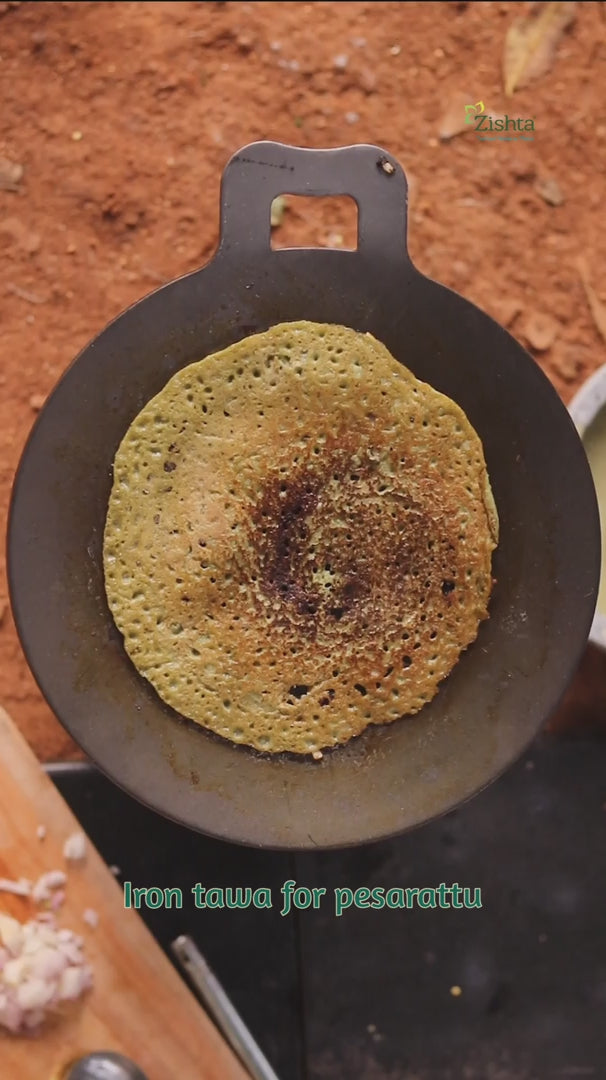
Pure Iron Dosa Tawa | Induction Friendly
Tax included.Shipping calculated at checkout
Pure Iron Dosa Tawa - Pre-treated and Seasoned Tawa for Crispy Dosas & More A Pure Iron Dosa Tawa is a flat, heavy pan traditionally used to make crisp dosas with even browning. It belongs to the family of Pure Iron and Cast Iron Cookware that...
- Handmade by 650+ artisan families
- Heirloom craft lasts generations
- Traditional wisdom tested in our kitchens
- Secure Checkout UPI · Cards · COD
- Easy Returns 7-day window
- Traditional Guides ask us anything

SECURE PAYMENT OPTIONS
 PAY VIA UPI
 $ VIA PAYPAL
PRODUCT INFORMATION
| Size | Weight (Kg) | Diameter In CM |
|---|---|---|
| Medium | 2.0 - 2.5 | 27.6 - 27.9 |
| Large | 2.9 - 3.0 | 30.0 - 30.5 |
DISCLAIMER
All our products are handcrafted and this results in each product being unique and slightly different from each other and therefore will have variations on dimensions & weight.---------------------------------------------------------
Pure Iron Dosa Tawa - Pre-treated and Seasoned Tawa for Crispy Dosas & More
A Pure Iron Dosa Tawa is a flat, heavy pan traditionally used to make crisp dosas with even browning. It belongs to the family of Pure Iron and Cast Iron Cookware that has been used in the Indian kitchens for generations.
Designed as a multi-purpose tawa, it is suitable for dosa, akki roti, ragi rotti, chapati, pav bhaji, and other tawa-based dishes. It is induction compatible.
Product Highlights
- Hand made from railway grade pure iron - Crafted using thick, first-grade iron (railway grade iron) known for strength and durability. The material choice ensures long life and consistent performance.
- Traditionally seasoned by hand- Each tawa is manually treated using husk and gingelly oil. This time-tested method creates a natural cooking surface without synthetic layers.
- Strong and thick construction- The thickness helps retain heat for longer periods, making it easier to spread batter evenly and flip dosas smoothly.
- Low oil cooking support- Once properly heated, the surface allows dosas to cook with very little oil, without sticking.
- Multi-purpose everyday tawa - Suitable for dosa, chappati, akki roti, ragi rotti, pav bhaji, and similar dishes cooked on a flat pan.
- Safe and tested cookware - Zishta pure iron cookware is tested in NABL accredited laboratories and complies with EU RoHS standards.
- Care & Maintenance - Clean it after use with regular dishwashing liquid or soap & regular scrubber. After cleaning, wipe it dry.
Note: The pure iron dosa tawa would have some maker lines (represent like scratches) which intrinsically happen in the making process. Application of oil and regular usage will remove the same. They are not defects/scratches.
Why Choose Zishta Pure Iron Dosa Tawa
- Made with traditional ironworking knowledge - The Zishta Pure Iron Dosa Tawa is hand made using first-grade pure iron, also known as railway grade iron, and crafted in a village in the Tenkasi taluk, Tamil Nadu, a region known for producing high-quality iron tawas for generations. The methods used are manual and slow, focusing on quality rather than speed.
- Designed for crisp dosa cooking - Pure iron holds and distributes heat evenly, which is essential for making dosas that are crisp on the outside and well-cooked inside.
- No chemical coating - The surface is created through traditional seasoning, not factory-applied non-stick coatings that wear off over time.
- Improves with regular use - With daily cooking and proper oiling, the tawa develops a better natural seasoning, making cooking easier over time.
- Available in multiple sizes - It is available in medium and large sizes to suit different household needs.
Frequently Asked Questions
1. What does “railway grade iron” mean?
It refers to high-quality pure iron known for strength, thickness, and long-lasting performance.
2. Does the tawa need special care after cooking?
Basic care such as drying after washing and lightly oiling the surface helps maintain the iron.
4. Does the tawa need oil before every use?
A light coating of oil before heating helps maintain seasoning and improves cooking performance.
5. Which Tawa is best for dosas, Iron or Cast Iron?
If dosas are a staple in your kitchen. pure iron or cast iron tawas are the most ideal options. Their superior heat distribution ensure you achieve the perfect paper-thin dosa every time. For a broader understanding of different tawa types, this tawa buying guide for Indian Cooking is helpful.
Packaged and Marketed by:
Zishta Traditions Private Limited
Address: 25/1, 9th Cross, 19th A Main, JP Nagar 2nd Phase, Bangalore 560078
Contact: +919008220185 , support@zishta.com
Country of Origin: India
Frequently asked Queries
Get your queries answered fast!
What is the difference between Iron and Cast Iron
Watch this video where its explained clearly the difference between Iron & Cast Iron: Click here
Are Iron cookware Pre-seasoned?
All our Iron & Cast Iron Cookware are pre-seasoned following traditional techniques. We use Gingely (Sesame) oil for the seasoning process.
How to start using the Pure Iron cookware?
Gently wash the cookware and heat it in gas burner, apply some cooking oil onto the cooking surface and cool it down. Now the cookware is ready for use.
How to remove rust from Pure Iron Cookware
Scrub the cookware with salt and oil mixture to remove the rust, then wash well, wipe them dry and apply some cooking oil and store.
Which cluster make the Pure Iron Cookware?
We at Zishta work with two clusters from Maharashtra and Tamil Nadu who have been making these cookware for at least 100 years!
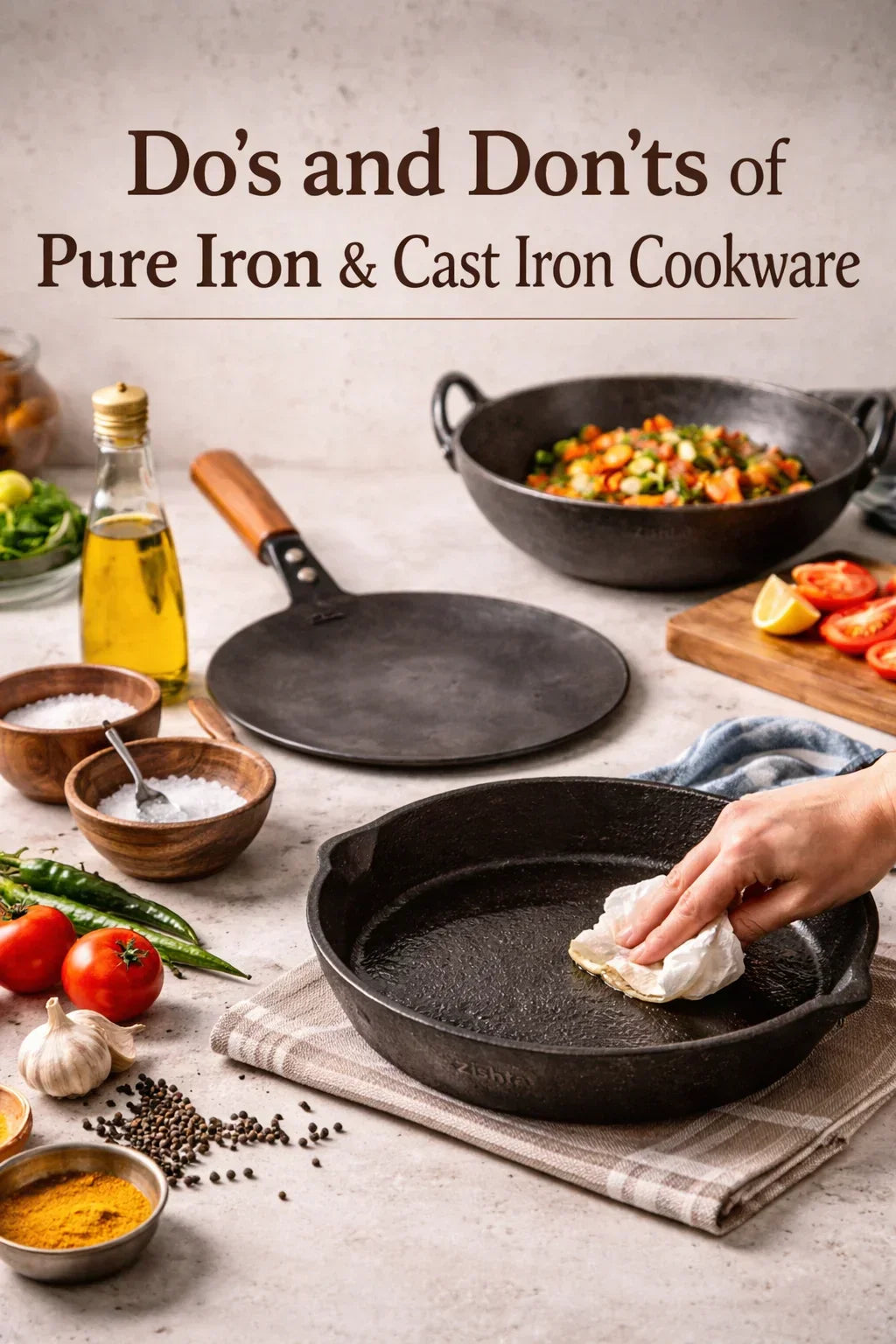
Do's & Don'ts of Iron & Cast Iron Cookware
A practical guide to the do’s and don’ts of pure iron and cast iron cookware. Learn seasoning, cooking safety, rust care, and daily maintenance.
Bodha our Blog
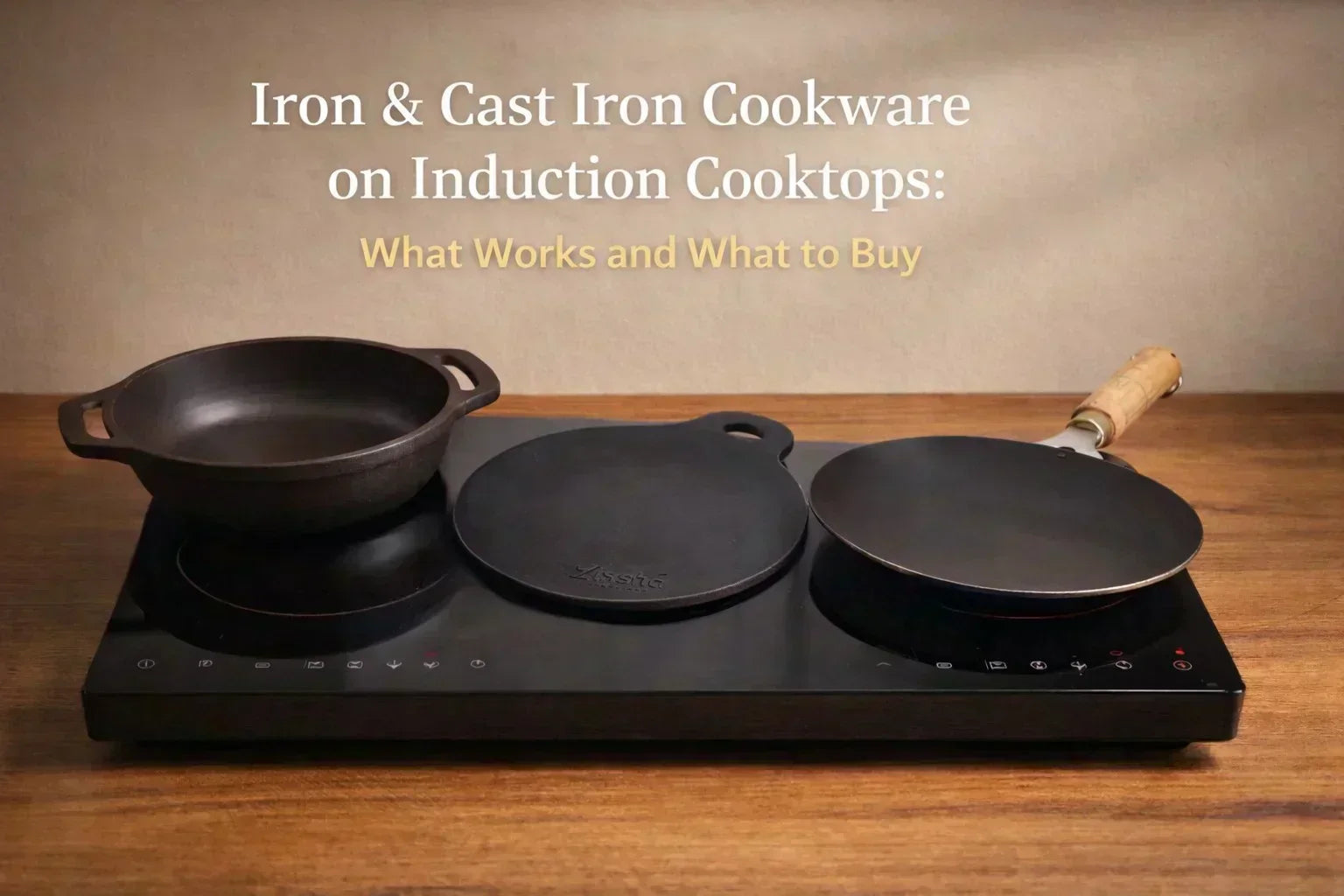
Iron & Cast Iron Cookware on Induction Cooktops: What Works and What to Buy
Not all iron cookware works the same on induction. Learn which iron and cast iron cookware are compatible, what to look for before buying, and how to choose the right cookware for everyday use.
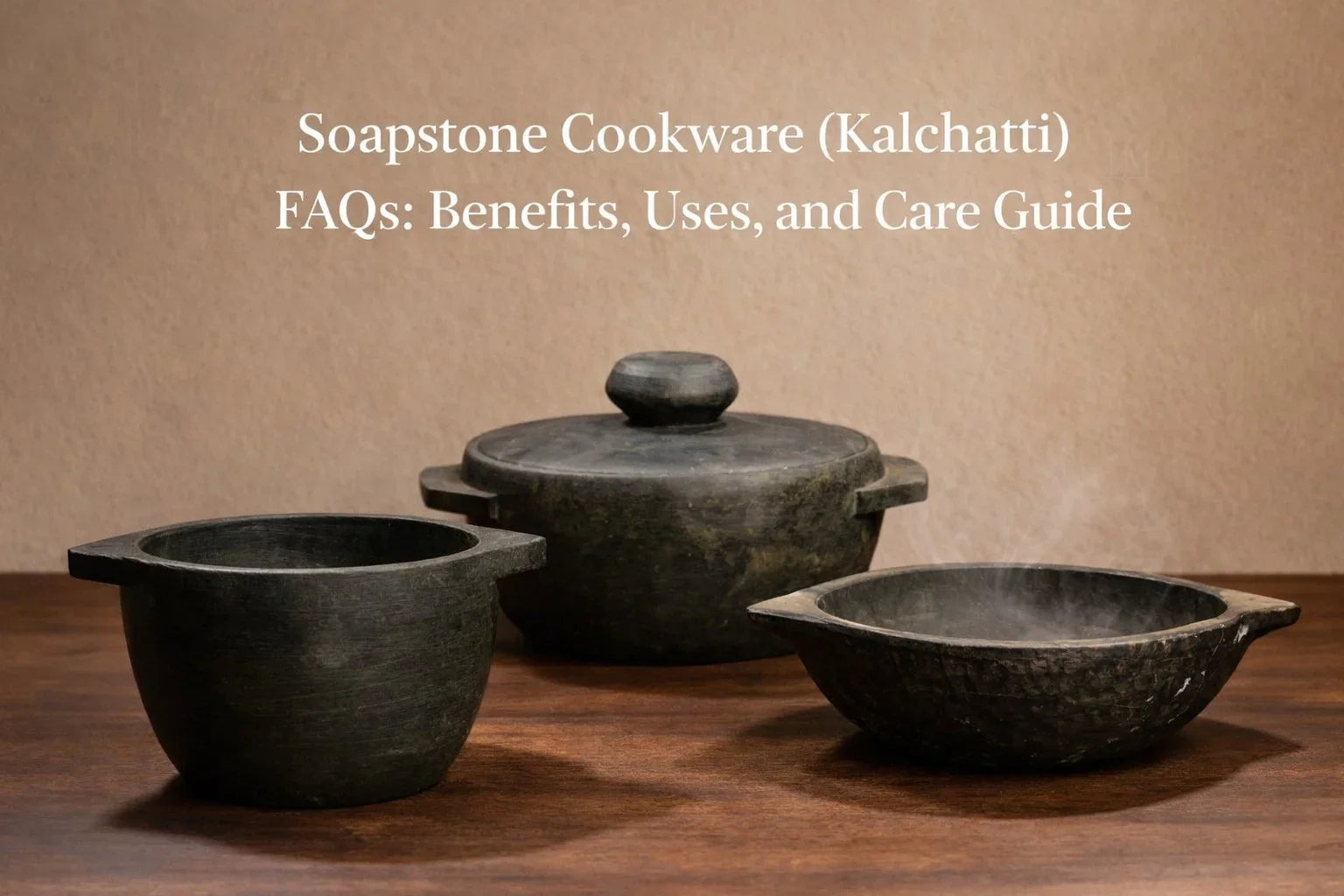
Traditional Soapstone Cookware (Kalchatti) FAQ: Uses, Health Benefits, and Maintenance
Read our soapstone cookware (kalchatti) FAQs blog to learn about its benefits, uses, health advantages, heat retention, seasoning, and care. Discover why traditional stone cookware is a trusted cho...
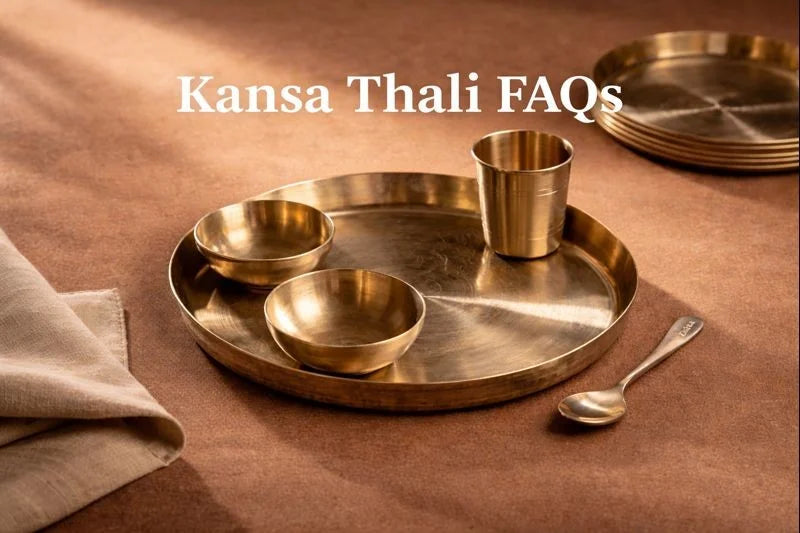
Kansa Thali FAQs: Benefits, Daily Use, Purity, Care & Safety Explained
A complete FAQ guide to Kansa thali covering health benefits, daily use, food safety, purity checks, and care - answered simply for first-time and regular users.