
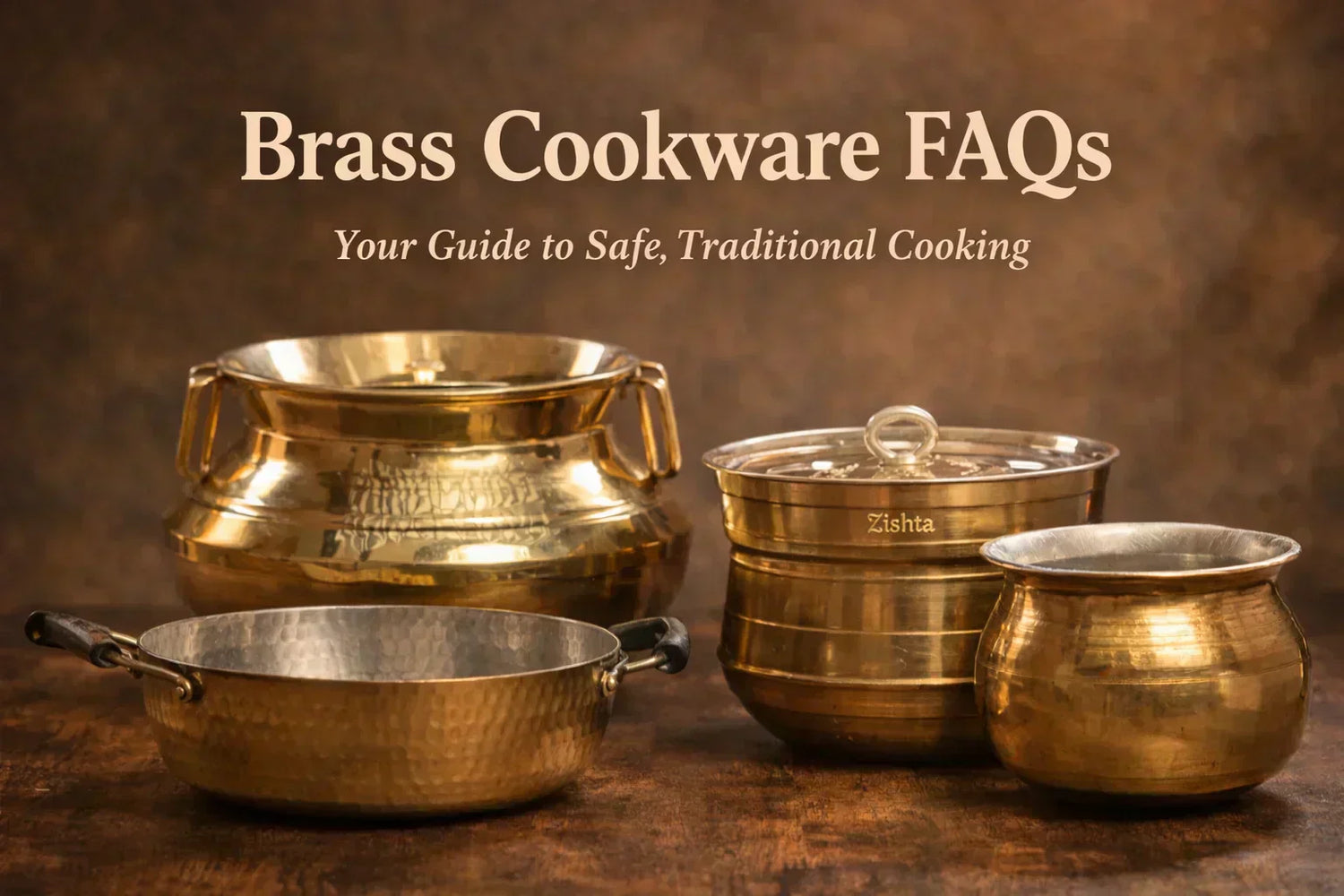
1. Is brass cookware safe for cooking?
Yes, brass cookware is safe when used correctly. Traditional brass cookware is usually tin-lined (kalai) to prevent food from reacting with the metal.
2. Does brass cookware need tin coating (kalai)?
Yes. Brass Cookware without tin coating should not be used for cooking. A tin coating makes brass cookware food-safe and suitable for daily use.
3. What foods should not be cooked in brass cookware?
Avoid cooking acidic foods like tamarind, tomatoes, lemon-based dishes, and vinegar-heavy recipes in brass cookware.
4. What foods are best cooked in brass cookware?
Brass is ideal for:
- Rice dishes (pongal, pulao)
- Milk-based dishes
- Slow-cooked curries
- Prasadam and festive foods
5. Does brass cookware react with food?
Bare brass can react with acidic ingredients. Tin-lined brass does not react and is safe for recommended foods.
6. How do I know if brass cookware is pure?
Pure brass cookware:
- Has a dull golden-yellow tone
- Is heavier than steel or aluminium
- Is usually handcrafted, not machine-pressed
7. How long does tin coating last on brass cookware?
Depending on usage, the kalai can last anywhere between 1-2 years. Once you see the brass/metal colour on the inside cooking surface, please make sure you re-do the kalai and then use the cookware.
8. Can tin coating be redone?
Yes. Tin coating (kalai) can be reapplied multiple times, which makes brass cookware long-lasting.
9. How do I clean brass cookware?
- Wash with mild soap and soft scrub
- Dry immediately after washing
- Avoid harsh chemicals or dishwashers
10. Can brass cookware go in the dishwasher?
No. Dishwashers can damage the tin coating and dull the brass surface.
11. Does brass cookware need seasoning?
No. Brass cookware does not require seasoning, unlike iron or cast iron.
12. Is brass cookware heavy?
Yes, brass cookware is heavier than steel or aluminium, which helps with even heat distribution.
13. Does brass cookware change the taste of food?
When properly tin-lined, brass cookware does not alter taste. Many people feel it enhances traditional flavours.
14. Can brass cookware be used on gas stoves?
Yes. Brass cookware works well on gas stoves. It is not suitable for induction unless specially designed.
15. Is brass cookware suitable for daily cooking?
Yes, for non-acidic, slow-cooked dishes, brass cookware is suitable for regular use.
16. Why does brass cookware turn black?
Blackening happens due to:
- Heat exposure
- Natural oxidation
This is normal and does not affect usability.
17. How do I polish brass cookware?
Brass cookware can become tarnished over time. To restore its shine:
- Polish the cookware regularly with a mixture of equal parts lemon juice and baking soda.
- Apply the mixture to the surface of the cookware with a soft cloth
- Then rinse thoroughly and dry completely.
18. Is brass cookware good for health?
Traditionally, brass is believed to support balanced cooking. Modern use focuses on safe, lined cookware and proper food choices. Health Benefits of Brass includes:
- Brass has antimicrobial properties.
- 93% of nutrients are retained in food cooked in brass.
- It preserves the antioxidants of the food cooked in them.
- Brass is known to aid in better functioning of digestive and immune systems.
19. How long does brass cookware last?
With proper care and periodic re-tinning, brass cookware can last for decades, often passed down generations.
20. Can milk be boiled in brass cookware?
Yes, milk can be boiled in tin-lined brass cookware. Avoid high acidity additives.
21. Does brass cookware leach metals into food?
When properly tin-lined and used for suitable foods, brass does not leach metals into food.
22. Can brass cookware be used for frying?
Yes, shallow frying and sautéing can be done in tin-lined brass cookware at moderate heat.
23. Can brass cookware crack or break?
Brass is tough and does not crack easily. With normal use, it is highly durable.
24. Can I store food in brass cookware?
Short-term storage (1-2 hours) is fine for non-acidic foods. Avoid overnight storage of acidic dishes.


Leave a comment
All comments are moderated before being published.
This site is protected by hCaptcha and the hCaptcha Privacy Policy and Terms of Service apply.