
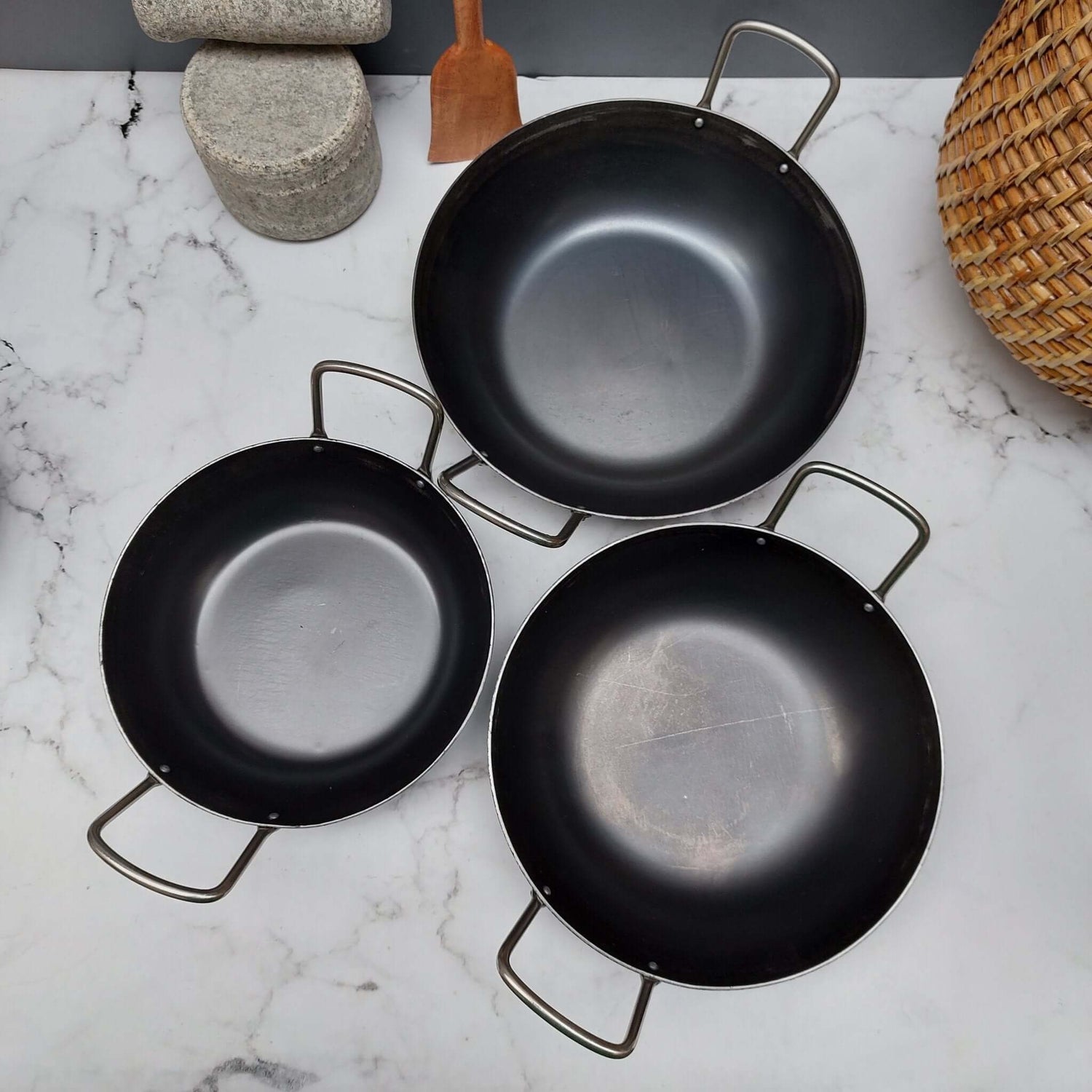
1. What is pure iron cookware?
Pure iron cookware is made from unalloyed iron with no synthetic coatings. It is different from cast iron and non-stick pans. These utensils are traditionally hand-crafted and develop a natural seasoning over time.
2. Is pure iron cookware safe for daily cooking?
Yes. When used correctly, pure iron cookware is safe for everyday cooking. It contains no chemical coating and has been used in Indian kitchens for generations.
3. Does cooking in pure iron increase iron intake?
Yes, small amounts of iron can naturally leach into food, especially acidic dishes. This may help support dietary iron intake, which is one reason pure iron utensils are traditionally recommended.
4. Is pure iron cookware good for health?
Many people prefer pure iron cookware because it is chemical-free and long lasting. It supports traditional cooking methods and avoids synthetic non-stick coatings.
5. What is the difference between pure iron and cast iron cookware?
Pure iron is lighter, smoother, and heats faster. Cast iron is thicker, heavier, and retains heat longer. Both need seasoning, but pure iron responds more quickly to temperature changes. Watch this video for more information:
6. Does pure iron cookware rust?
Yes, iron can rust if exposed to moisture. This is normal and not a defect. Proper drying, light oiling, and regular use prevent rusting.
7. How do I season pure iron cookware for the first time?
Wash the pan, dry it completely, apply a thin layer of oil, and heat it until the oil smokes lightly. Repeat this process a few times to build a natural non-stick layer.
8. How often should pure iron cookware be seasoned?
Light seasoning after cleaning is enough for regular use. A full re-seasoning is only needed if the pan rusts or loses its coating.
9. Can pure iron cookware be used on gas stoves?
Yes. Pure iron cookware works very well on gas stoves and open flames. This is how it has traditionally been used.
10. Can I use pure iron cookware on induction cooktops?
Most pure iron cookware is induction compatible because iron is magnetic. Always check the product description to be sure.
11. Is pure iron cookware non-stick?
When properly seasoned and used on medium heat, pure iron cookware becomes naturally non-stick. It improves with regular cooking.
12. What foods are best cooked in pure iron cookware?
Dosas, rotis, stir-fried vegetables, shallow fries, and everyday Indian meals work very well. Over time, the pan adapts to frequent dishes.
13. Can acidic foods be cooked in pure iron?
Tamarind based cooking & citric food is not recommended to be cooked in iron cookware as acidic property releases more iron in the food that what is needed & hence it gives a slightly bitter taste.
14. How do I clean pure iron cookware?
Clean with warm water and a soft scrub. Avoid harsh detergents. Dry immediately and apply a light coat of oil before storing.
15. How to remove rust from pure iron cookware?
To remove rust, apply oil all over the cookware and heat it. Once cooled wash it with water.
16. Why does food stick to my iron pan?
Food usually sticks if the pan is not seasoned well, not preheated properly, or if cooking is done on very low heat. These issues improve with use.
17. Is pure iron cookware heavy?
Pure iron cookware is lighter than cast iron but heavier than aluminium. Many users find it easier to handle for daily cooking.
18. How long does pure iron cookware last?
With basic care, pure iron cookware can last for decades. It is often passed down across generations.
19. Is pure iron cookware better than non-stick cookware?
Pure iron cookware does not use chemical coatings and does not peel over time. Many people choose it for long-term use and traditional cooking.
20. Does pure iron cookware need special maintenance?
No complex maintenance is required. Drying after washing, light oiling, and regular cooking are enough.
21. Can we store cooked food in ironware for long?
Any food cooked in ironware must be immediately transferred to another vessel and should not be stored for long time.
22. Why does my iron pan change color over time?
Color changes are normal. They indicate seasoning buildup and regular use. Darker pans are usually better seasoned.
23. Is handcrafted pure iron cookware better than machine-made?
Handcrafted cookware is often thicker in key areas and made using traditional methods. Many users prefer it for durability and heat control.
24. Is pure iron cookware environmentally friendly?
Yes. Pure iron cookware is plastic-free, coating-free, and fully recyclable. Its long lifespan also reduces waste.
25. How do I store pure iron cookware?
Store it in a dry place with a thin layer of oil. Avoid stacking when damp. Proper storage prevents rust and keeps the pan ready to use.
Read our guide to pure iron and cast iron cookware to learn more about usage, cleaning and maintenance of iron utensils.


Leave a comment
All comments are moderated before being published.
This site is protected by hCaptcha and the hCaptcha Privacy Policy and Terms of Service apply.